Why Gospel Music Requires a Different Kind of Theory
Dec 29, 2025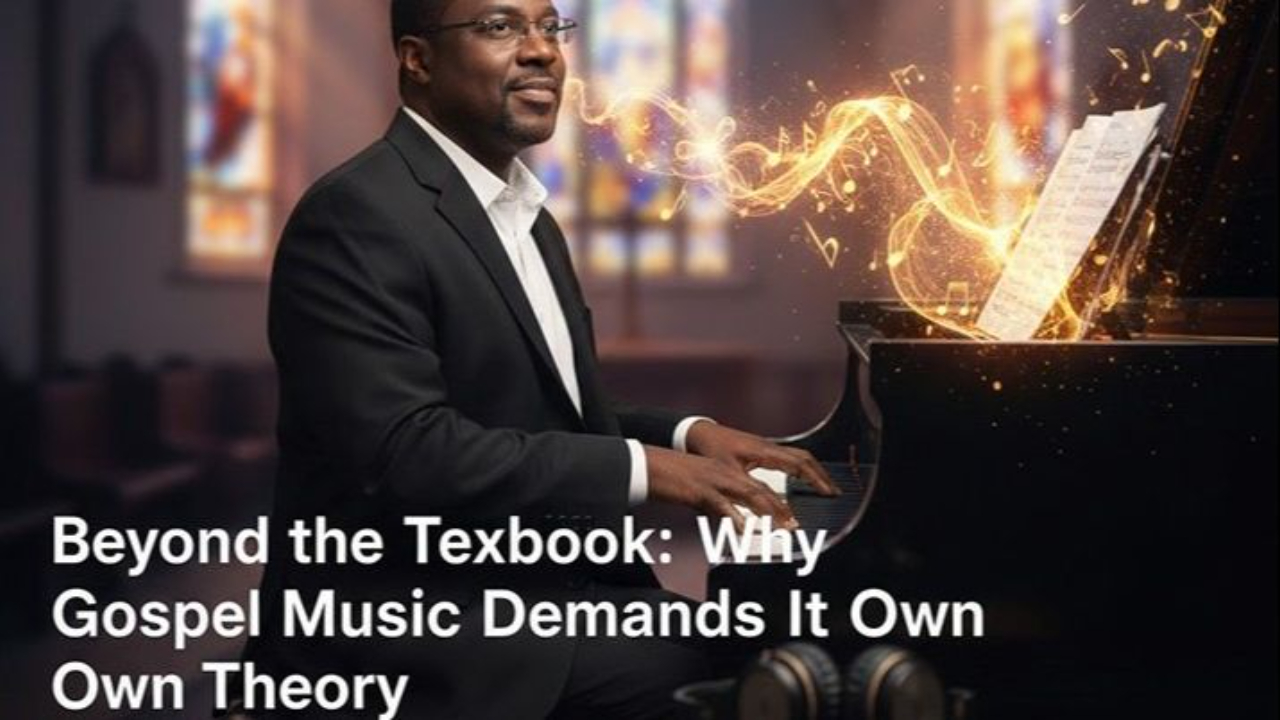
Beyond the Textbook: Why Gospel Music Demands Its Own Theory
Introduction: Reading the Sheet Music Wrong
We’ve all been there: a classically trained musician steps into a Gospel choir rehearsal or sits down at a church piano, confidently armed with scales, chords, and inversions from their textbooks. Yet, something feels... off. The "rules" they learned don't quite capture the feel, the soul, or the spontaneous brilliance of Gospel music. It's like trying to explain the taste of a complex, home-cooked meal using only the periodic table of elements.
Gospel music, with its rich history and profound spiritual roots, often operates on principles that extend beyond standard Western music theory. It's not that traditional theory is "wrong," but rather that it's incomplete when applied to a genre so deeply tied to improvisation, communal expression, and spiritual fervor. This isn't just about different notes; it's about a different DNA.
The Heartbeat: Rhythmic Nuance and Groove
Traditional theory often prioritizes metronomic precision, counting beats, and precise subdivisions. Gospel music, while having a strong underlying pulse, thrives on a more fluid, organic sense of rhythm.
-
Pocket and Feel: It’s less about hitting the beat exactly, and more about sitting in the pocket—a subtle push and pull that gives the music its characteristic groove. This can be challenging to transcribe or teach with standard rhythmic notation.
-
Implied Rhythms: Drummers and bassists often create intricate, syncopated patterns that are felt more than strictly counted, driving the spiritual energy of the song.
-
Call and Response: The rhythmic interplay between soloist and choir, or instruments and vocals, is a foundational element that defies rigid theoretical boxes.
The Language of Harmony: Voicings and Extensions
While traditional theory gives us major and minor triads, Gospel harmony quickly moves into a much richer, more complex sound world.
-
Rich Voicings: Gospel pianists, organists, and background vocalists use dense, often dissonant, and highly expressive voicings that aren't typically taught in introductory harmony courses. These aren't "errors" but intentional choices that create emotional depth.
-
Chord Extensions and Alterations: The abundant use of 9ths, 11ths, 13ths, and altered chords (b9, #11, b13) are integral to the Gospel sound, adding tension and release that standard theory often classifies as "jazz" or "advanced," but are commonplace here.
-
Emotional Arc: These harmonies aren't just for show; they serve to build emotional narratives within the song, supporting the sermon or the testimony. The resolution often brings a sense of spiritual peace or triumph.
The Unwritten Rule: Improvisation and Spontaneity
Perhaps the biggest distinction is Gospel music's embrace of the moment.
-
Ad-libs and Runs: Vocalists and instrumentalists frequently add improvised embellishments, riffs, and "runs" that are highly personal and often spontaneous. These are not deviations from the score; they are the score in real-time.
-
Modal Interchanges and "Shouting Music": The spontaneous shift into certain modes or harmonic patterns to support a "shouting" or ecstatic moment of worship is a distinct theoretical concept almost exclusive to this genre.
-
The Spirit-Led Flow: At its highest expression, Gospel music allows for a profound connection between the musicians, the congregation, and the Holy Spirit, leading to musical moments that simply cannot be pre-written or perfectly replicated.
Beyond the Notes: What Truly Matters
Ultimately, the "theory" of Gospel music isn't just about notes and chords; it's about context, purpose, and spiritual connection. It’s about understanding:
-
The History: The resilience, struggle, and triumph embedded in the spirituals and early Gospel hymns.
-
The Culture: The communal worship experience, the call and response, and the role of music in spiritual formation.
-
The Spirit: How music serves as a vessel for praise, prophecy, and testimony.
Introducing The Digital Music Vault: Your Gospel Theory Guide
This is precisely why we created The Digital Music Vault. We understand that learning Gospel music requires more than just academic exercises. It requires a deep dive into its unique language, its history, and its spiritual heart.
In the Vault, you’ll find:
-
Music Lessons: Professional tutorials that teach you the actual voicings, runs, and rhythmic approaches used in Gospel.
-
Gospel History & Legends: Contextualize the music by understanding the pioneers who shaped its sound and spirit.
-
Daily Devotions: Nurture the "Heart of the Musician" so your theory is always grounded in purpose.
Don't just learn what notes to play; learn why they sing, how they move, and the spirit they carry. It's time to read the sheet music right.
Call to Action: Ready to master the true theory of Gospel music? Explore our Music Lessons and unlock the full potential of your ministry in The Digital Music Vault today!