
The Soul of Spontaneity: A Beginner’s Guide to Gospel Improvisation
Dec 30, 2025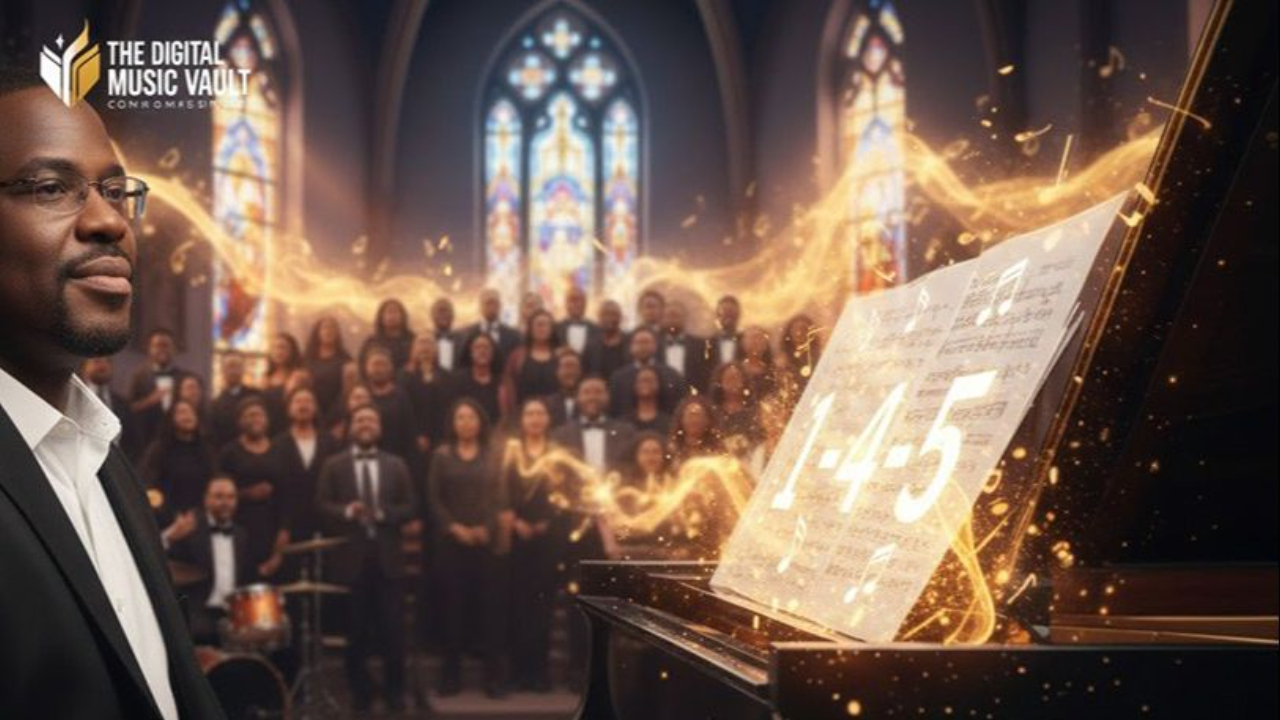
What is Improvisation, Really?
Many musicians believe that improvisation is just "playing whatever you feel." While feeling is a huge part of it, true improvisation is composition in real-time. In the Gospel tradition, improvisation is a conversation. It is the ability to take a melody or a chord progression and speak through it, adding "color" and "spirit" to the foundation. It isn’t about playing a million notes; it’s about knowing which notes carry the weight of the message you are trying to support.
The Secret: The "1-4-5" Linear Pattern
One of the most effective ways to start improvising without getting lost is to use a Linear Neighbor Pattern. This allows you to create beautiful, flowing runs over almost any major chord.
The Concept:
Instead of just playing a chord, we are going to use the 1st, 4th, and 5th notes of the scale. This "triadic" movement creates that classic, open Gospel sound found in the playing of legends.
The Pattern (Key of C):
- Your Left Hand: Holds a solid C Major Chord (C - E - G) or just the Octave (C - C).
- Your Right Hand: Will play this repeating "Grace" pattern:
- C (The 1)
- F (The 4)
- G (The 5)
- C (Octave up)
The Exercise:
- Start Slow: Play C - F - G - C in a steady upward motion.
- Add the "Swing": Instead of playing them evenly, "roll" the F into the G quickly.
- The Inversion: Try the same notes in a different order: G - C - F.
Pro Tip: Try playing these three notes (C, F, G) in any order over a C Major chord. You will notice that no matter how you mix them up, they sound "right." This is because you are avoiding the "half-steps" that create clashing tension.
How to Use This in Ministry
Improvisation is most powerful during the "transition" moments of a service—during a prayer, an altar call, or when a preacher is speaking.
- Keep it Breathable: Don't fill every second with notes. Play your pattern, then let the sound ring out.
- Match the Dynamic: If the room is quiet, play this pattern in the upper register of the piano very softly. If the spirit is high, play it with more attack in the middle of the keyboard.
Want to Unlock the Full Language?
This pattern is just one "sentence" in the language of Gospel. In The Digital Music Vault, we break down the full vocabulary of runs, "shout" patterns, and worship transitions.