Is the Church Over-Reliant on "Radio Hits"?
Apr 06, 2026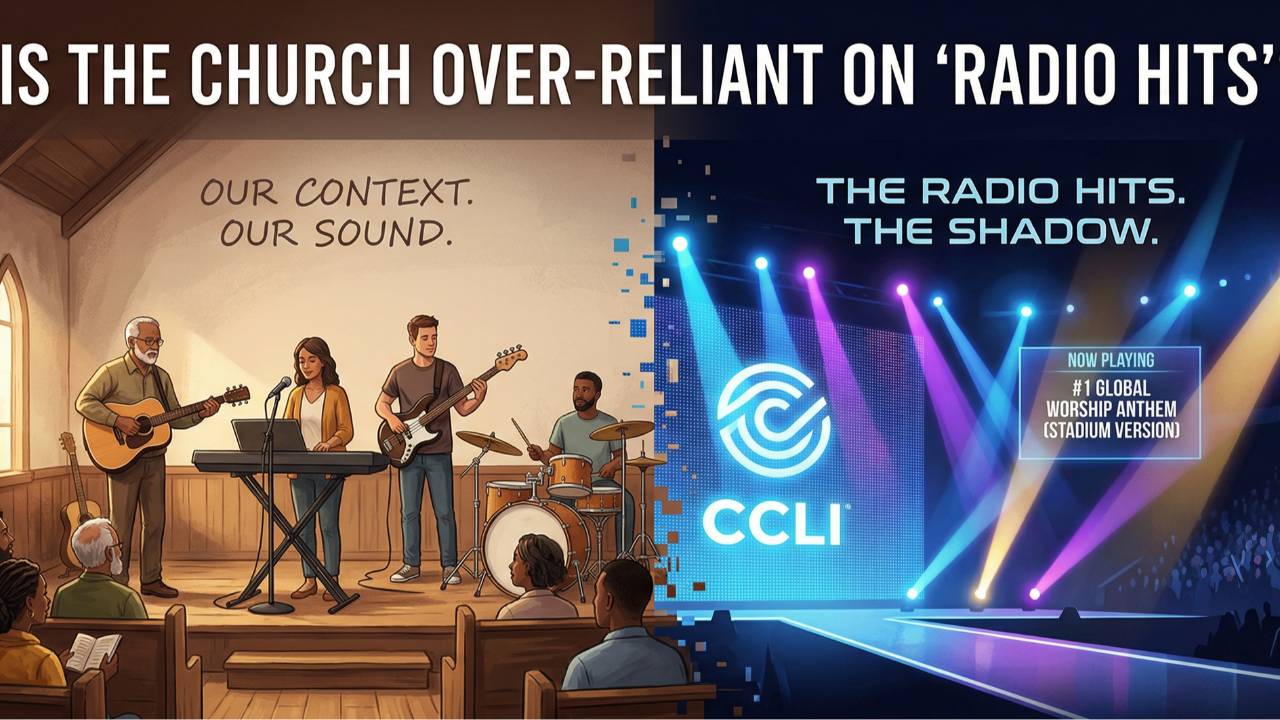
Every Sunday morning, a common scene unfolds in local churches across the country: A worship team of four—a volunteer drummer, a bassist, a keyboardist, and a lead singer—plugs in and attempts to recreate a 10-minute "Maverick City" or "Hillsong" anthem.
The original recording has 15 vocalists, three electric guitars, and a $100,000 post-production budget. The local team has a heart for God and 20 minutes of rehearsal time.
The result? Often, it’s a frustrating struggle that leaves the musicians exhausted and the congregation feeling like they are watching a cover band rather than participating in worship. It’s time we talk about the "Copycat Crisis" in the local church.
The "Stuttering" Soundtrack
We live in the golden age of worship music accessibility. We can stream the latest global hits seconds after they drop. While this is a blessing, it has created an unintended side effect: The homogenization of worship. When every small-town church feels obligated to play the Top 20 CCLI hits exactly like the record, we lose the unique "flavor" of the local community. We are trading our "native tongue" for a radio-ready dialect that doesn't always fit our context.
The Excellence Trap
There is a thin line between "striving for excellence" and "imitating a production."
- The Struggle: Small teams often kill their own joy by trying to trigger multi-tracks, sync lighting cues, and hit vocal runs that were designed for professional recording artists.
- The Failure: When the "sound" becomes the goal, the spirit of the room often takes a backseat. If the team is focused on hitting a complex bridge exactly like the album, they aren't free to lead the people in the room.
Stifling the Local Songwriter
Perhaps the greatest tragedy of the "Radio Hit" era is the death of the local song.
In the past, the Church was the birthplace of local hymns and spiritual songs that reflected the specific trials and triumphs of that specific congregation. Today, the local songwriter often feels their work isn't "good enough" because it doesn't sound like what’s on the radio.
By over-relying on global hits, we are effectively silencing the unique testimony of our own communities.
Building a Bridge Back to Authenticity
How do we move away from being a "copycat" church and back toward being a "worshiping" church?
- Arrange for Your Room: Stop trying to sound like the CD. If you only have a piano and a guitar, lean into that! A stripped-back, authentic arrangement is always better than a cluttered, struggling one.
- Celebrate the Local Sound: Encourage your musicians to write. Even a simple chorus born out of a sermon series can be more impactful for your people than a global hit.
- Prioritize Participation over Performance: The metric of success isn't how "tight" the band sounded; it's how many people in the pews were able to sing along.