
Emotional Manipulation vs. Authentic Worship
Mar 13, 2026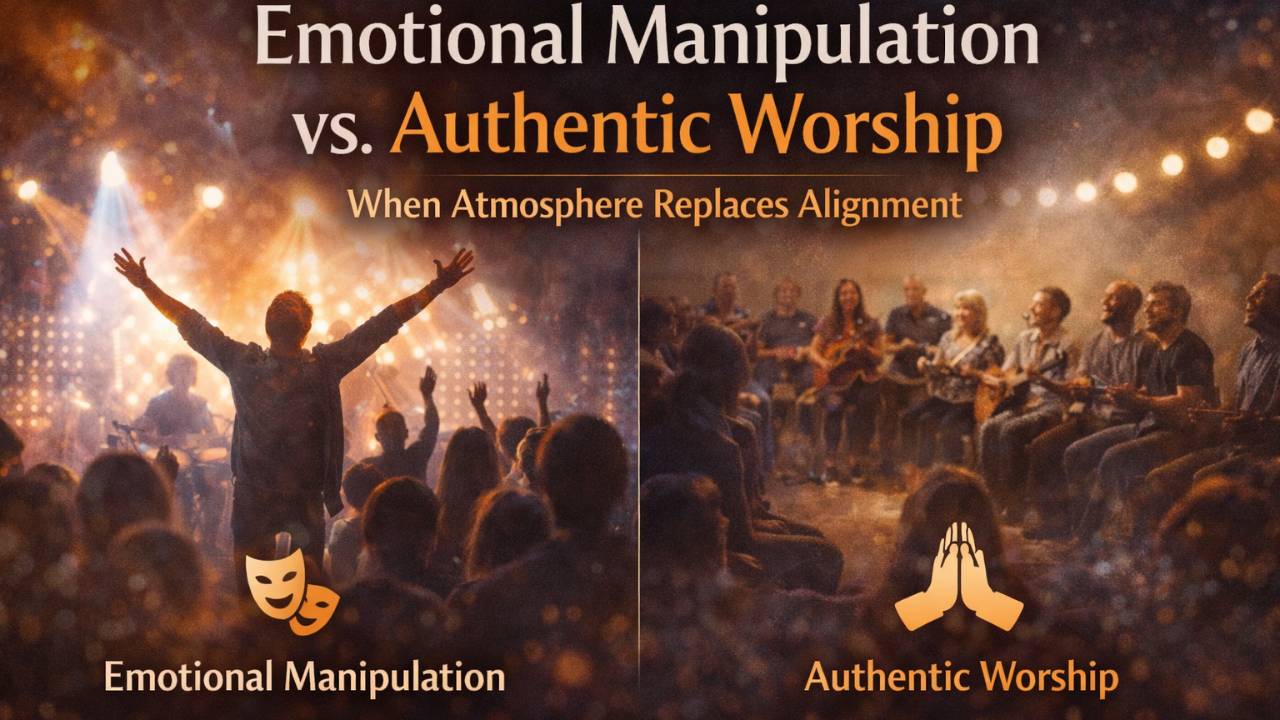
When Atmosphere Replaces Alignment

In today’s worship culture, emotion is everywhere.
Lights swell.
Pads rise underneath prayer.
Drums build.
Voices intensify.
The room feels charged.
But here’s the honest question:
Are we creating space for God to move… or engineering moments for people to feel something?
There is a difference.
🎭 What Is Emotional Manipulation?
Emotional manipulation in worship doesn’t always look malicious. It often hides behind good intentions.
It can sound like:
-
“Let’s hit that bridge again — the room wasn’t crying yet.”
-
“Stay on the pad under prayer — it keeps the mood right.”
-
“Take it up a key; we need more energy.”
-
“Don’t stop — the lights haven’t peaked.”
None of these are inherently sinful.
But when emotional response becomes the goal rather than spiritual alignment, worship drifts toward performance.
Emotion becomes the product.
🙏 What Authentic Worship Looks Like
Authentic worship is not emotionless.
It can be loud.
It can be quiet.
It can be tearful.
It can be joyful.
But the difference is this:
Emotion is a byproduct — not the objective.
Authentic worship:
-
Flows from spiritual preparation
-
Respects lyrical meaning
-
Leaves room for silence
-
Doesn’t force repetition to squeeze out a reaction
-
Values depth over drama
It trusts that God moves without stage direction.
🔊 When Atmosphere Becomes Strategy
Production is powerful.
Lighting, sound design, keys, transitions — all of it can enhance worship.
But enhancement becomes manipulation when:
-
Music is used to sustain emotion that has already peaked
-
Silence feels uncomfortable, so it’s avoided
-
The worship leader cues reactions verbally
-
Emotional crescendos are timed like a concert
If every service feels like a perfectly engineered emotional arc, we should pause.
Real spiritual movement is not always predictable.
🧠 Why This Matters for Worship Teams
When emotional response becomes the measurement of success, teams start chasing:
-
Tears instead of transformation
-
Volume instead of vulnerability
-
Energy instead of intimacy
Over time, this creates exhaustion.
Singers strain.
Musicians push.
Leaders feel pressure to “produce” results.
But authentic worship removes that burden.
It shifts responsibility back where it belongs.
🎶 The Test
Ask your team:
-
Could we lead this song without lights?
-
Could we sit in silence without panic?
-
Could we resist repeating the hook just to stretch emotion?
-
Would the worship still carry weight if the production failed?
If the answer is yes, your foundation is healthy.
If not, you may be leaning more on atmosphere than alignment.
💡 Authenticity Requires Courage
It takes courage to:
-
End a song without a dramatic build
-
Allow a quiet moment to linger
-
Resist the urge to “rescue” a service emotionally
-
Trust spiritual depth over musical manipulation
Authentic worship is not less powerful.
It is more stable.
It produces lasting fruit rather than temporary feeling.
🔥 Final Thought
Emotion is not the enemy.
Manipulation is.
Worship should move hearts — but not through pressure.
When a team is spiritually prepared, musically disciplined, and emotionally honest, atmosphere becomes organic.
And organic worship doesn’t need to be forced.
It simply flows.