Calling vs. Contract: Why Your Ministry Needs Both
Apr 12, 2026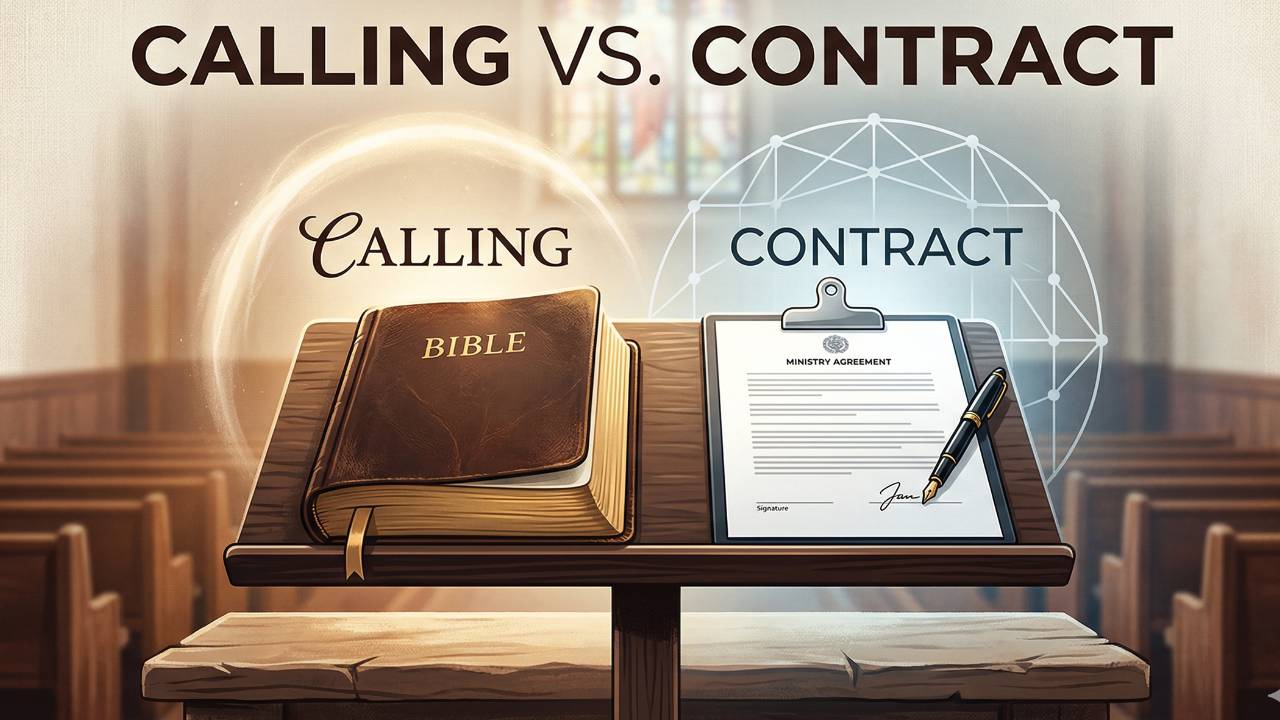
In the church world, we love the word "Calling." It’s a beautiful, heavy word that implies a divine appointment—a soul-deep push to serve God through music. But there’s another word that often makes church leaders and musicians "twitchy": "Contract."
Too often, we treat these two words like enemies. We think that if you have a "calling," you shouldn’t need a "contract." We assume that legal paperwork somehow diminishes the move of the Spirit.
The truth? A calling without a contract is a recipe for burnout, and a contract without a calling is just a gig. To build a sustainable, thriving music ministry, you need both.
- The Myth of the "Infinite Volunteer"
Many churches use "calling" as a way to guilt musicians into over-extending themselves. "You’re called to this, right?" becomes a justification for last-minute rehearsals, 60-hour work weeks, and zero financial boundaries.
- The Reality: Calling is the motivation, but it is not a resource. You can be called to lead worship and still need a clear job description, defined hours, and fair compensation to protect your family and your mental health.
- The Contract as a "Covenant of Clarity"
We need to stop seeing a contract as a "lack of faith" and start seeing it as a tool for Clarity. A well-written agreement—or a "Memorandum of Understanding"—protects both the musician and the church:
- For the Musician: It defines expectations for preparation, arrival times, and additional duties (like administrative work or mentoring youth).
- For the Church: It ensures that the "calling" is backed by professional accountability. It moves the relationship from "subjective feelings" to "objective goals."
- Avoiding the "Gig" Mentality
On the flip side, a contract alone isn't enough. We’ve all seen the "hired gun" who shows up 5 minutes before service, plays the notes perfectly, and leaves during the sermon. They have a contract, but no calling.
- The Danger: When music becomes only a contract, the stage becomes a job site. The "spiritual weight" of the worship is lost because the heart isn't engaged in the mission of the house.
- The Bridge: Professionalism Powered by Purpose
This is where the Digital Gospel Music Master-Vault (DGMMV) comes in. We believe in the "Called Professional." We don't just teach you how to play better; we teach you how to manage your ministry. Whether it’s learning how to draft a musician’s agreement that honors the church or developing the technical skills to back up your divine appointment, we provide the "contract-level" excellence that sustains a "calling-level" heart.